
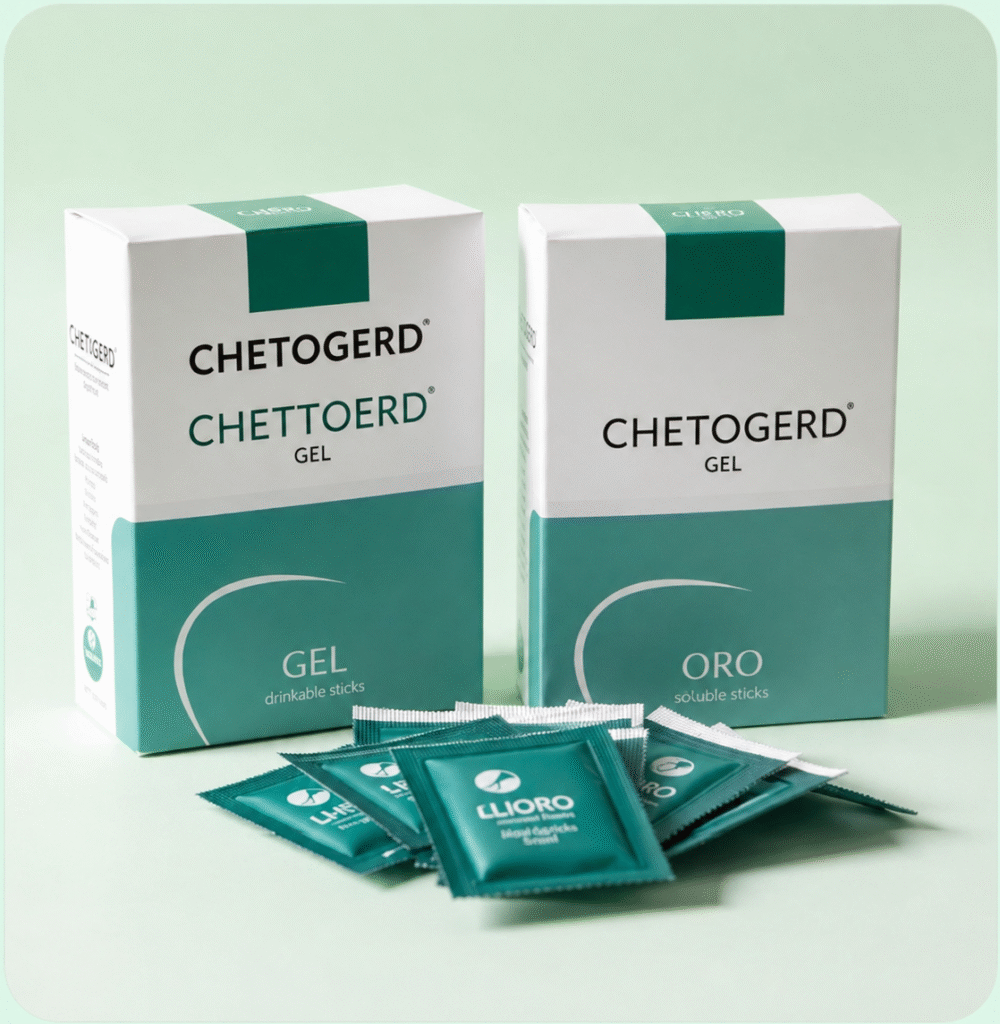




CHETOGERD Clinical Trial

Home / Human Care / Gastroenterology Solutions / CHETOGERD / CHETOGERD Clinical Trial

Clinical Evaluation of CHETOGERD® GEL and ORO in GERD and LPR

CLINICAL TRIAL PRESENTATION

Assessing efficacy, mucosal protection, and symptom relief in gastroesophageal and laryngopharyngeal reflux diseases – for investigators, gastroenterologists, ENT specialists, and ethics committees.

[Presenter Name Affiliation. Date]

02 EXECUTIVE SUMMARY

Why a new approach to reflux management

GERD, NERD, and LPR carry a high regional burden (GCC prevalence ranges from 15% to 58%), while long-term PPI therapy leaves meaningful gaps.

01

The Clinical Problem

High prevalence of GERD/NERD and LPR, with limitations of long-term PPI use, including bone fractures, risk of C. difficile (italic) infection, and persistent symptoms in ~30% of patients.

02

The Solution

A multimodal nutraceutical approach targeting immediate relief (acidity control and raft action) and long-term effectiveness (mucosal repair and neuromodulation).

03

Trial Objective

To establish clinical evidence supporting the safety of CHETOGERD® and the symptom reduction and quality-of-life improvements it provides,

03 OBJECTIVES & ENDPOINTS

What the trial will measure

Primary Objective

Evaluate the reduction in frequency and intensity of typical GERD symptoms (retrosternal burning, regurgitation, heartburn) and atypical extra-esophageal symptoms (dysphonia, hoarseness, chronic cough) over a defined treatment timeline.

Secondary Objectives

  • Mucosal healing/protection and quality of life, assessed using the Reflux Disease Questionnaire (RDQ)
  • Safety profile, tolerability, and compliance with the drinkable and orosoluble stick formats

Primary Endpoints

A statistically significant decrease (P < 0.05) in symptom frequency and severity scores from baseline (T0) to follow-up checkpoints (T2, T3, and T6).

04 DESIGN & METHODOLOGY

A prospective, structured evaluation

Mirroring successful academic setups, such as the University of Bologna study.

Prospective

Observational/interventional, single- or multicenter trial

NERD & LPR

Adults diagnosed with non-erosive reflux disease or laryngopharyngeal reflux

N = 250

Target sample size of enrolled patients

2–3 months

Active phase: 3 sticks daily after main meals, followed by as-needed maintenance

05 PATIENT SELECTION

Inclusion & exclusion criteria

Inclusion Criteria

Adults (18+ years) with confirmed typical symptoms (heartburn, acid taste) or atypical symptoms (dysphonia, throat clearing, chronic cough).

Patients experiencing suboptimal symptom control or seeking alternatives to conventional antisecretory therapy.

Exclusion Criteria

History of severe, complicated gastrointestinal disease (deep peptic ulcer perforation, high-grade stenosis, advanced Barrett's esophagus requiring immediate surgical intervention).

Known hypersensitivity to any formulation component (alginate, hyaluronic acid, aloe vera, tryptophan, etc.)

Pregnant or lactating women (unless specifically cleared under protocol guidelines).

06 INVESTIGATIONAL PRODUCT

CHETOGERD® GEL and ORO: three mechanisms, one regimen

Drinkable sticks (GEL) and orosoluble sticks (ORO), dosed at 1 to 3 sticks per day after main meals.

01. Mucosal Protection

Hyaluronic acid (medium molecular weight) and aloe vera gel (acemannan) for barrier creation and anti-inflammatory action.

02. Buffer and Raft Action

Sodium alginate, calcium, bicarbonate, and Musa paradisiaca (banana dry extract) (italic, in both places) for rapid acid neutralization and mechanical reflux prevention.

03. Neuromodulation

L-Tryptophan to regulate gut-brain axis motility via serotonin and melatonin pathways.

Sodium alginate
Hyaluronic acid
Aloe vera
Musa paradisiaca
L-Tryptophan
Calcium and bicarbonate
07 DATA COLLECTION

Validated tools on a defined timeline

The Reflux Disease Questionnaire (RDQ) tracks the frequency and severity of retrosternal burning, retrosternal pain, heartburn, epigastric pain, acid taste, and regurgitation.

T0

Baseline

Start of therapy; initial RDQ scoring and symptom mapping.

T2/T3

Short-term follow-up

2 to 3 months post-treatment; interim efficacy and tolerability review.

T6

Long-term follow-up

6 months; maintenance-phase outcomes and durability of relief.

08 EXPECTED OUTCOMES

Anticipated results across the reflux spectrum

01

Symptom Relief

Rapid control of acute burning and pain within hours of administration.

02

Statistical Targets

A statistically significant drop (P < 0.05) in symptom intensity scores is anticipated.

03

Extra-Esophageal Benefits

Documented improvement in atypical symptoms (hoarseness, globus sensation, and throat irritation), which is particularly valuable for ENT specialists.

04

Safety

A clean safety profile, without PPI-associated long-term risks such as micronutrient malabsorption or elevated infection risk.

09 SAFETY & ETHICS

Regulatory compliance at every step

Ethical Considerations

Compliance with the Declaration of Helsinki, Good Clinical Practice (GCP) guidelines, and mandatory IRB/Ethics Committee approvals.

Informed Consent

Signed informed consent obtained from all participating subjects before enrollment.

Adverse Event Reporting

Standard operating procedures for logging, grading, and reporting any unexpected side effects.

10 CONCLUSION & NEXT STEPS

Bridging the gaps in conventional GERD management

CHETOGERD® offers a comprehensive, non-pharmacological nutraceutical alternative. Here is the path to evidence.

1

Month 1

Protocol finalization and ethics submission

2

Months 2–5

Patient recruitment and enrollment

3

Month 6

Data analysis and interim reporting

4

Month 8+

Publication and scientific dissemination

11 ACKNOWLEDGMENTS AND Q&A

Let's advance reflux care together

With thanks to our academic and clinical research partners. The floor is open for questions from investigators, gastroenterologists, ENT specialists, and ethics committees.

AANVEE Lifesciences FZCO

Dubai CommerCity, UAE

Clinical Lead

kschadha@aanveelife.com

Business Support

bizsupport@aanveelife.com